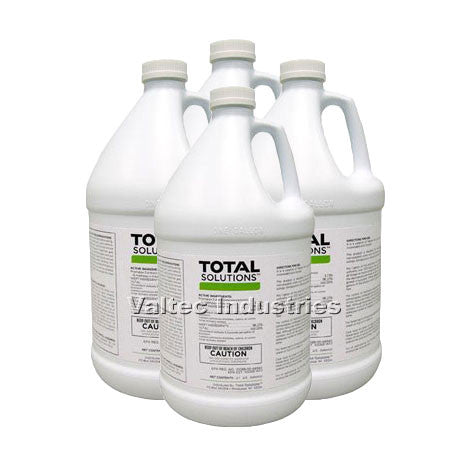
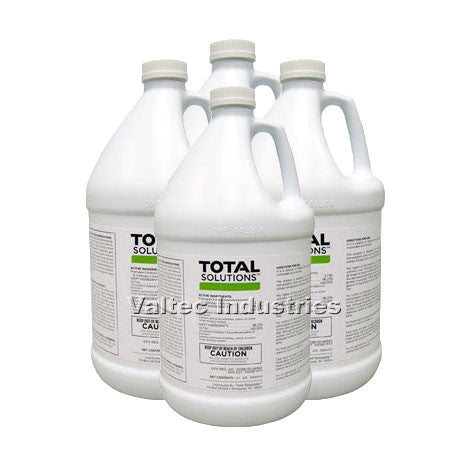
Quantity included in price: 6 Gallon Pail
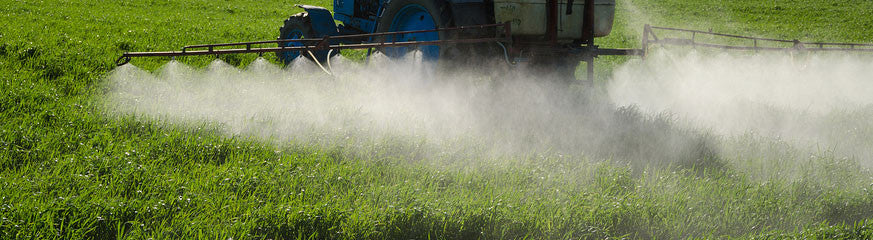
This nourishing liquid mineral supplement provides a form of iron required to prevent or cure iron chlorosis in turf, ornamental shrubs and trees. This versatile concentrate is easily absorbed and can be applied or injected into the soil, or sprayed directly onto foliage.
For Use On:
• Trees • Turf • Athletic fields • Golf courses
Benefits:
• Reverses or reduces the pale green or yellow discoloration associated with chlorosis. • Provides iron in a form that is immediately available to vegetation. • Remains in the soil for extended feeding. • Compatible with tanks mixes of most fertilizers, insecticides, fungicides and penetrating aids.
Directions:
• Turf: Dilute 5-10 gals with sufficient water to cover 1 acre, or 8 oz with sufficient water to cover 1000 square ft. • Trees & shrubs: For root feeding, use 4 oz per inch of trunk diameter diluted with 5 to 10 gals of water.
Click here for MSDS Click here for Technical Data Sheet
If an adequate amount of iron is not available to plants, iron
deficiency (iron chlorosis) will result. This condition may
be recognized by the nature of deficiency symptoms. The
symptoms of iron deficiency appear on the youngest, newest
leaves. The area between the leaf veins becomes pale yellow
or white (this is called interveinal chlorosis). No noticeable
physical deformity occurs, but in severe cases the youngest
leaves may be entirely white and stunted. Note that it may be
difficult to distinguish iron deficiency symptoms from those of
other nutrients, particularly zinc, on some plants.
Susceptibility to iron deficiency varies greatly between plants.
Desert plants are less susceptible to iron deficiency because they
have mechanisms that enable them to solubilize and absorb iron
from high pH soils. Plants from regions with acidic soils do not
have this ability. Most humid tropical and subtropical regions
fall into this category and therefore many of the ornamental and
crop plants we have imported from these areas are susceptible
to iron deficiency. Examples include citrus, rose, gardenia, crepe
myrtle, and many others. Members of the Ericaceae or Heath
family such as azaleas, rhododendrons, and blueberries are
extremely susceptible to iron deficiency.
There are several methods for correcting iron deficiency once
it is identified. Chelated iron fertilizers, in which the iron is combined with
a chemical called a chelate that helps keep the iron in a plant available
form, are most appropriate for application to the soil.
Treatment may have to
be repeated approximately monthly during the growing season.
Frequency will depend on soil and plant properties, and is best
gauged by observing plant performance.
The chelated iron discussed above is man-made. Natural chelates
can be found in soil organic matter. Practices that increase levels
of soil organic matter, such as adding manure to soil, can help
maintain iron in a plant-available state.
|